

Stop Punishing a Stressed Body and Calling It Wellness
Why a harder workout is not always the answer

Everybody loves to prescribe harder workouts to bodies that are already under siege. That is part of the problem. Too many stressed women are being told to punish themselves back into health while their nervous systems are running on fumes. This essay explores Pilates as something deeper than exercise: a practice of breath, control, awareness, and regulation. Because sometimes the problem is not that the body needs more discipline. The problem is that the body has not felt safe for a very long time.
There is a particular kind of cruelty in the way wellness culture talks to stressed bodies. If you are exhausted, anxious, inflamed, foggy, or running on empty, the answer is almost always the same: push harder. Sweat more. Stay disciplined. Be more consistent. But a body living under chronic stress does not always need more intensity. Sometimes it needs regulation. Sometimes it needs safety.
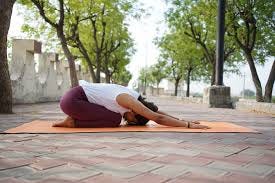
That is part of what makes Pilates matter. Pilates is not just exercise. It is a mind-body practice built on breath, concentration, control, alignment, and awareness. Research has linked Pilates to improvements in anxiety, depressive symptoms, fatigue, and energy, which is exactly why it deserves to be discussed as more than a fitness trend (Fleming & Herring, 2018). It offers something many stressed bodies are not getting enough of: structured movement that does not demand panic to count as progress.
Breath is one of the clearest reasons why. Stress often pulls people into shallow, upper-chest breathing, the kind of breathing that keeps the body hovering near alert. Pilates asks for something more intentional. It asks people to slow down, organize their breath, and connect movement to control. Research on diaphragmatic breathing has linked these kinds of practices to lower stress, improved emotional state, and healthier autonomic regulation (Ma et al., 2017; Hamasaki, 2020). In plain language, when breathing changes, the nervous system can change too.
That matters because chronic stress does not just live in the mind. It shows up in the jaw, the shoulders, the spine, the gut, the sleep cycle, and the breath. It changes posture. It changes concentration. It changes how easily a person moves through the day without feeling overwhelmed. A body under stress often begins bracing without permission. Pilates interrupts that pattern by asking the body to pay attention to itself rather than merely pushing through.
It also improves body awareness, and that matters psychologically. Interoceptive awareness, or the ability to notice internal bodily sensations, has been linked to better emotion regulation (Price & Hooven, 2018). That means learning to notice tension, breath-holding, agitation, fatigue, or collapse sooner is not some soft extra. It is part of how people become less disconnected from themselves. Pilates teaches that kind of noticing. It asks people to feel where they are gripping, where they are rushing, and where they are holding more than they need to.
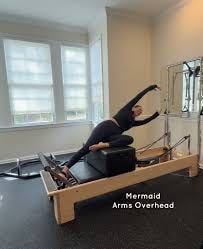
That may sound small, but it is not. A person who can tell when their body is clenching has a better chance of softening before stress becomes overwhelming. A person who can feel when they are holding their breath has a better chance of regulating before panic takes over. A person who can tell the difference between challenge and threat is already moving differently through the world. Pilates can help build that distinction.
There is also evidence that Pilates can support sleep, mood, and resilience over time. In one randomized controlled trial, a 12-week Pilates program improved sleep quality, anxiety, depression, and fatigue in postmenopausal women (Aibar-Almazán et al., 2019). Other review-level research has found that Pilates can improve sleep quality overall (Chen et al., 2020). So no, one class is not going to heal a life built under pressure. But consistent practice may help a stressed body stop acting like rest is unsafe.
That is really the point. Not every stressed body needs a harder workout. Some need a safer way back to themselves. Pilates cannot remove every source of stress from a person’s life, but it can offer something wellness culture rarely values enough: strength without punishment, effort without panic, and movement that helps the body feel less like a battlefield.
Wellness culture loves to moralize intensity. It loves to make people believe that if a workout hurts enough, drains enough, or demands enough suffering, then it must be working. But exhausted bodies are not always asking for more force. Sometimes they are asking for a different relationship with effort. One rooted in breath. One rooted in attention. One rooted in the possibility that health need not feel like punishment to be real.
Pilates offers that possibility. It asks the body to work, but not to abandon itself in the process. And for women whose nervous systems have been running on fumes for far too long, that shift can matter more than another hard workout ever will.
References
Aibar-Almazán, A., Hita-Contreras, F., Cruz-Díaz, D., de la Torre-Cruz, M., Jiménez-García, J. D., & Martínez-Amat, A. (2019). Effects of Pilates training on sleep quality, anxiety, depression, and fatigue in postmenopausal women: A randomized controlled trial. Maturitas, 124, 62–67.
Chen, Z., Ye, X., & Wang, Y. (2020). Effect of Pilates on sleep quality: A systematic review and meta-analysis. Frontiers in Neurology, 11, 158.
Fleming, K. M., & Herring, M. P. (2018). The effects of Pilates on mental health outcomes: A meta-analysis of controlled trials. Mental Health and Physical Activity, 15, 110–130.
Hamasaki, H. (2020). Effects of diaphragmatic breathing on health: A narrative review. Medicines, 7(10), 65.
Ma, X., Yue, Z.-Q., Gong, Z.-Q., Zhang, H., Duan, N.-Y., Shi, Y.-T., Wei, G.-X., & Li, Y.-F. (2017). The effect of diaphragmatic breathing on attention, negative affect and stress in healthy adults. Frontiers in Psychology, 8, 874.
Price, C. J., & Hooven, C. (2018). Interoceptive awareness skills for emotion regulation. Frontiers in Psychology, 9, 798.